
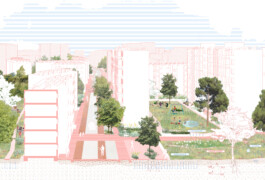
2. Preis beim EUROPAN E18 Madrid – Städtebaulicher Ideenwettbewerb
Matti Drechsel und Atidh Jonas Langbein mit Nami Gradolí Giner, Eduardo Puertes Espert und Mar Monfort Vengut (c-lab)

Die Nachbarschaft Colonia Casa de Campo steht exemplarisch für die vielen großen Wohnkomplexe, die angesichts der Wohnungsnot und Landflucht nach dem spanischen Bürgerkrieg, rund um die großen Städte entstanden. Ohne städtebauliche Vorgaben jenseits eines groben Straßenrasters bebauten verschiedene Unternehmen die zur Verfügung gestellten Flächen so kosteneffizient wie ihnen möglich. Auf diese Weise geriet die Qualität der entstandenen Räume ebenso sehr in den Hintergrund wie die Nachhaltigkeit der sozialen Entwicklung des Quartiers. Für das Stadtsanierungsprogramm 'Plan Regenera Madrid' sollte nun im Rahmen des EUROPAN 18 ein Action Plan entwickelt werden, welcher am Beispiel der Nachbarschaft im Südwesten der Stadt einen strategischen Umgang mit dem baulichen Erbe der Franco-Zeit aufzeigt.
Wir freuen uns sehr über das Kommentar der Jury zu unserem Beitrag:
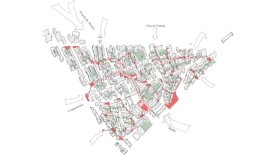
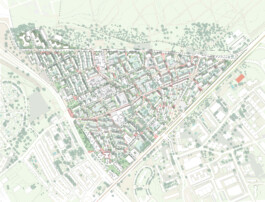
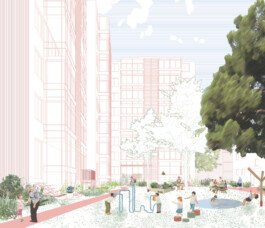
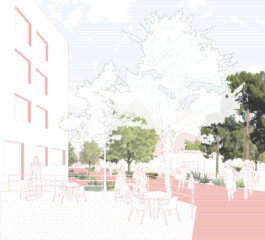
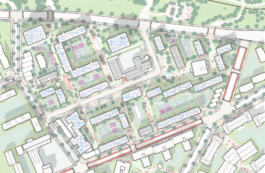
The Cultivating the Commons project stands out for its thorough, detailed, and rigorous reading of the site, which becomes the main support for its transformation. This proposal would reorganize the hierarchy of open spaces based on the interrelation of two new overlapping networks; the network of ecological axes, which bring Casa de Campo Park into the neighbourhood and extend beyond it, and the network of semi-pedestrian axes, which connect to public transport hubs and other small urban nodes. The jury particularly valued the project’s approach to citizen participation, highlighting the organization into “corralas”(community pods/clusters) as a spatial strategy associated with small communities, enabling a more efficient and focused development of the process. The methodological proposal and the definition of a fully integrated Action Plan, which was closely connected to the site, its residents, the administration, and a supporting technical team, were also praised. Together, these elements create an expanded diagnosis of the neighbourhood, managed through the Neighbourhood Regeneration Office. Furthermore, the proposal establishes strategies for the ecological restoration and revitalization of the “corralas”, based on ecosystem-based design of future open spaces and their integration into the metabolic cycles of the neighbourhood, significantly enhancing the area. This is complemented by the addition of elements co-designed with users, which support new uses within the system of open spaces.

2. Preis beim EUROPAN E18 Madrid – Städtebaulicher Ideenwettbewerb
Matti Drechsel und Atidh Jonas Langbein mit Nami Gradolí Giner, Eduardo Puertes Espert und Mar Monfort Vengut (c-lab)


Die Nachbarschaft Colonia Casa de Campo steht exemplarisch für die vielen großen Wohnkomplexe, die angesichts der Wohnungsnot und Landflucht nach dem spanischen Bürgerkrieg, rund um die großen Städte entstanden. Ohne städtebauliche Vorgaben jenseits eines groben Straßenrasters bebauten verschiedene Unternehmen die zur Verfügung gestellten Flächen so kosteneffizient wie ihnen möglich. Auf diese Weise geriet die Qualität der entstandenen Räume ebenso sehr in den Hintergrund wie die Nachhaltigkeit der sozialen Entwicklung des Quartiers. Für das Stadtsanierungsprogramm 'Plan Regenera Madrid' sollte nun im Rahmen des EUROPAN 18 ein Action Plan entwickelt werden, welcher am Beispiel der Nachbarschaft im Südwesten der Stadt einen strategischen Umgang mit dem baulichen Erbe der Franco-Zeit aufzeigt.

Wir freuen uns sehr über das Kommentar der Jury zu unserem Beitrag:
The Cultivating the Commons project stands out for its thorough, detailed, and rigorous reading of the site, which becomes the main support for its transformation. This proposal would reorganize the hierarchy of open spaces based on the interrelation of two new overlapping networks; the network of ecological axes, which bring Casa de Campo Park into the neighbourhood and extend beyond it, and the network of semi-pedestrian axes, which connect to public transport hubs and other small urban nodes. The jury particularly valued the project’s approach to citizen participation, highlighting the organization into “corralas”(community pods/clusters) as a spatial strategy associated with small communities, enabling a more efficient and focused development of the process. The methodological proposal and the definition of a fully integrated Action Plan, which was closely connected to the site, its residents, the administration, and a supporting technical team, were also praised. Together, these elements create an expanded diagnosis of the neighbourhood, managed through the Neighbourhood Regeneration Office. Furthermore, the proposal establishes strategies for the ecological restoration and revitalization of the “corralas”, based on ecosystem-based design of future open spaces and their integration into the metabolic cycles of the neighbourhood, significantly enhancing the area. This is complemented by the addition of elements co-designed with users, which support new uses within the system of open spaces.


